The 5 Variants of MS
- Clinically Isolated Syndrome (CIS)
- Relapsing Remitting Multiple Sclerosis
- Primary Progressive Multiple Sclerosis
- Secondary Progressive Multiple Sclerosis
- Radiologically Isolated Syndrome

Clinically Isolated Syndrome (CIS)
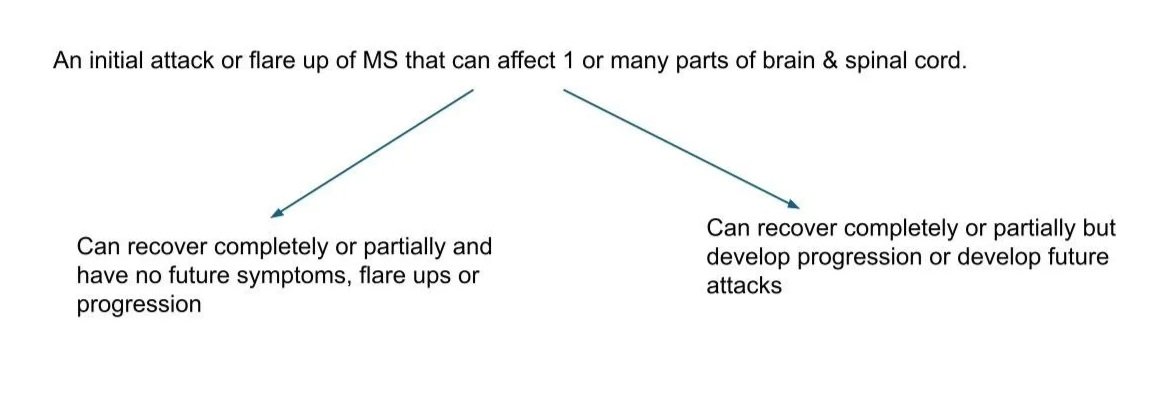
Relapsing Remitting Multiple Sclerosis
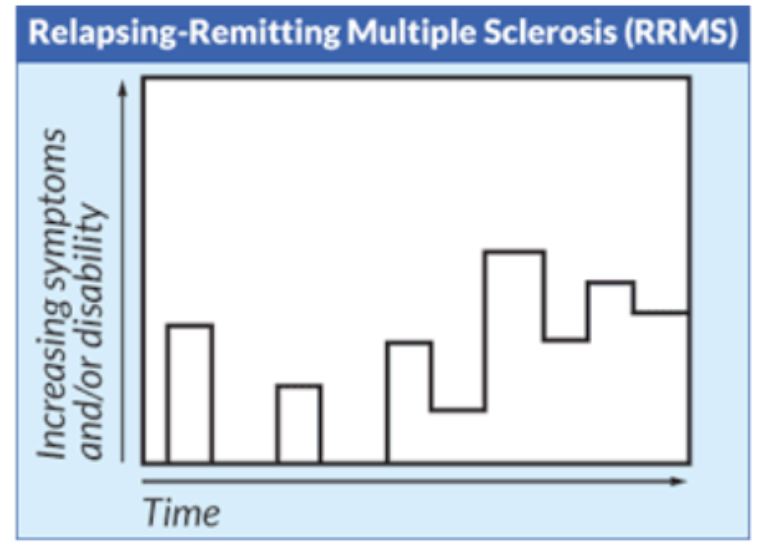
What is RRMS?
This is the most common type of multiple sclerosis (MS).
People have attacks (also called relapses or flare-ups) that last more than 24 hours.
Between attacks, symptoms may improve completely or partially.
2024 McDonald Criteria
The 2024 McDonald Criteria allow doctors to diagnose MS earlier, as long as there is no better explanation for the symptoms.
A diagnosis can now be made if:
A person has had just one attack or flare-up lasting more than 24 hours.
A person has non-specific symptoms, such as headaches or seizures, or paroxysmal symptoms like facial pain.
MRI changes that look like MS are found by chance during a brain scan done for another reason.
Tests Used for Early Diagnosis
Doctors may use:
MRI of the brain, spinal cord, and orbits (eye sockets) to:
Show white matter lesions in areas such as:
Around the ventricles of the brain
Brainstem
Spinal cord
Close to the surface of the brain
Optic nerve (seen on MRI of the orbit)
Show changes over time, such as:
A new lesion
A contrast-enhancing lesion
Special eye tests
Optical coherence tomography (OCT)
Visual evoked potentials (VEP)
Spinal fluid (CSF) tests
Oligoclonal bands
Kappa free light chain index
Specialized MRI findings
Central vein sign
Paramagnetic rim lesion
Primary Progressive Multiple Sclerosis
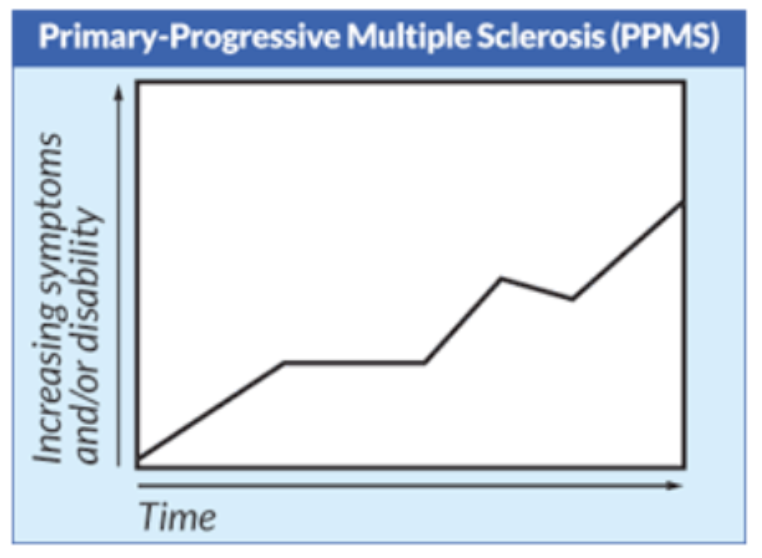
What is PPMS?
Symptoms gradually get worse from the beginning.
There are no clear attacks or relapses.
Symptoms continue to worsen for more than 12 months.
There should be no better explanation for the symptoms.
2024 McDonald Criteria
Doctors use many of the same tests as RRMS to diagnose PPMS.
Tests Used for Diagnosis
MRI of the brain, spinal cord, and orbits to:
Show white matter lesions in areas such as:
Around the ventricles of the brain
Brainstem
Spinal cord
Close to the surface of the brain
Optic nerve (seen on MRI of the orbit)
Show changes over time, such as:
A new lesion
A contrast-enhancing lesion
Two or more spinal cord lesions can substitute for involvement in 2 of the 5 typical MS areas.
Special eye tests
Optical coherence tomography (OCT)
Visual evoked potentials (VEP)
Spinal fluid (CSF) tests
Oligoclonal bands
Kappa free light chain assay
Specialized MRI findings
Central vein sign
Paramagnetic rim lesion
Secondary Progressive Multiple Sclerosis
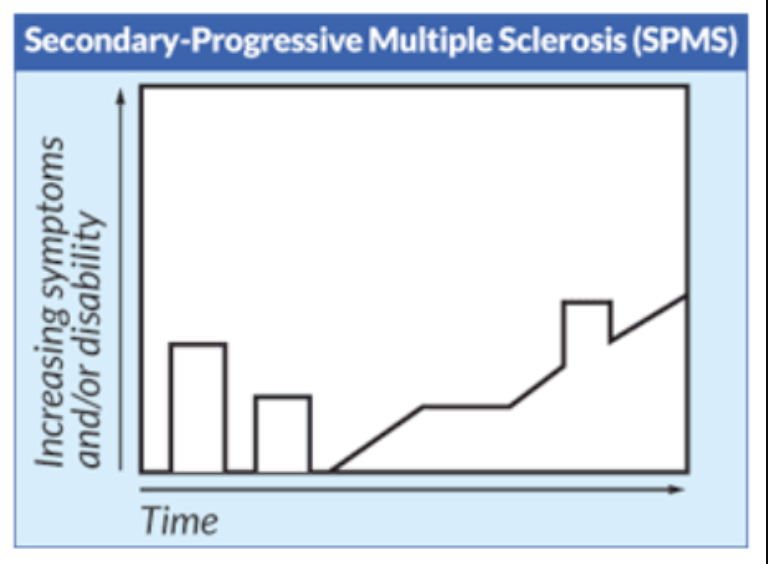
What is SPMS?
Some people who have relapsing-remitting MS develop SPMS over time.
After repeated relapses, some symptoms do not return completely to normal.
This leads to gradual worsening of disability over time.
Diagnosis
SPMS is diagnosed only in people who were previously diagnosed with RRMS.
The diagnostic tests and criteria are essentially the same as for RRMS.
Why is SPMS Important?
Treatment decisions become especially important.
Some people have relapsing SPMS, meaning:
They continue to have relapses.
They still have high inflammatory activity.
This is more common in younger patients.
These patients often respond better to the same anti-inflammatory disease-modifying therapies used for RRMS.
Radiologically Isolated Syndrome
Radiologically Isolated Syndrome (RIS)
What is RIS?
RIS was first described in 2009.
MRI scans show changes that look like MS, but the person has no MS symptoms or only non-specific symptoms.
There should be no better explanation for the MRI findings.
Chance of Developing Clinical MS
Adults with RIS may later develop clinical MS:
About 19% within 2 years
About 34% within 5 years
About 51% within 10 years
Children with RIS have a higher chance:
About 61% develop clinical MS
Certain test results increase the chance of developing MS sooner:
Oligoclonal bands in CSF
High neurofilament light chain protein
High CSF kappa free light chain index
2024 McDonald Criteria
The 2024 McDonald Criteria now allow some people with incidental MRI findings of MS, even with no symptoms or only non-specific symptoms, to be diagnosed with MS instead of remaining classified as having RIS.