Obesity
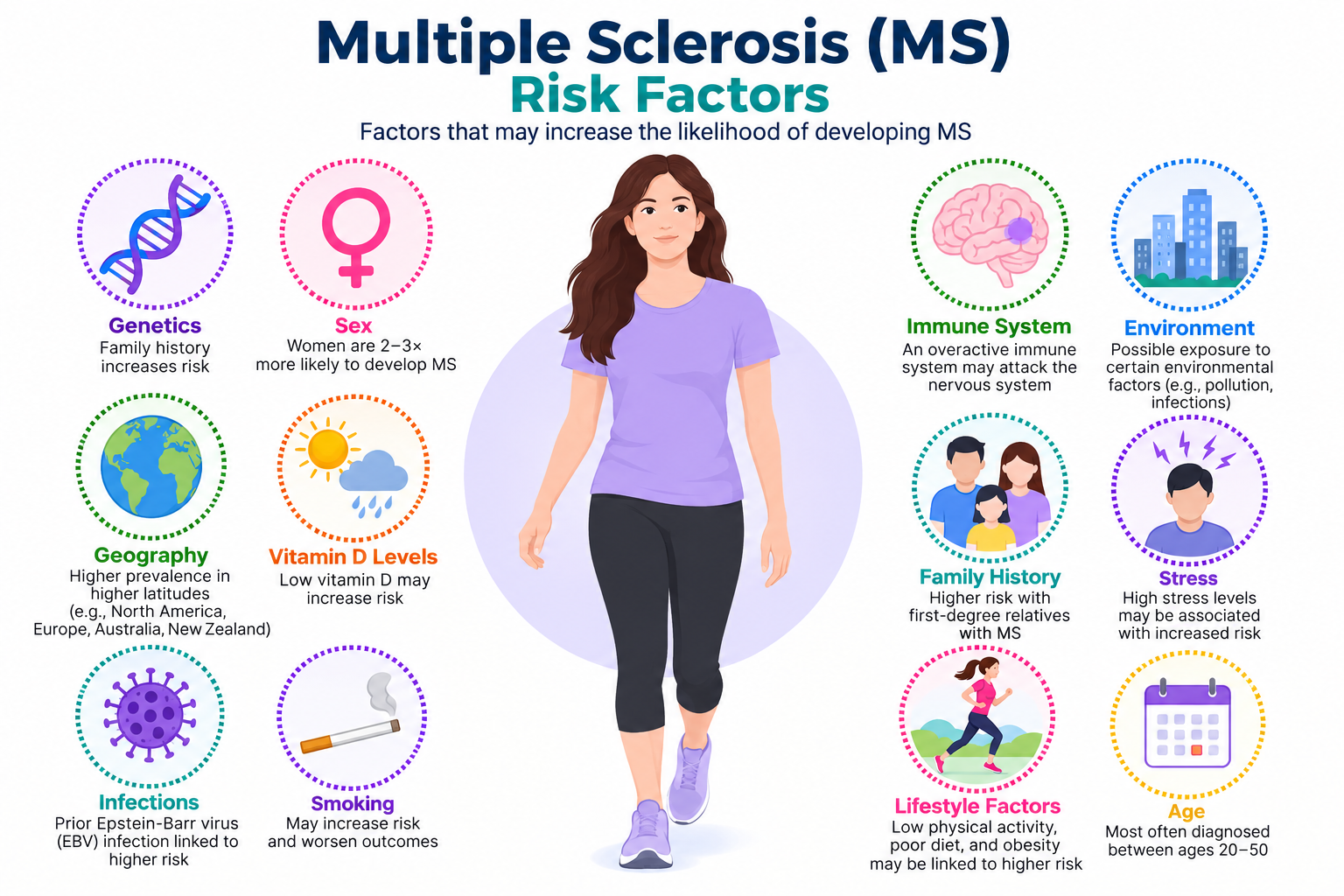
Being overweight or obese, especially during adolescence and young adulthood, has been associated with an increased risk of developing MS.
Researchers believe that excess body fat may contribute to chronic inflammation and changes in immune system function that increase susceptibility to autoimmune diseases.
Smoking
Smoking is a well-established risk factor for MS.
Research has found that:
The risk of MS increases with the number of cigarettes smoked.
Exposure to secondhand smoke may also increase risk.
Smoking may promote inflammation and abnormal immune responses that contribute to disease development.
In addition to increasing the risk of developing MS, smoking has also been linked to faster disease progression in people who already have MS.
Emerging and Possible Risk Factors
Researchers continue to study other factors that may influence MS risk, but current evidence is less definitive.
These include:
High-salt diets
Disruptions in sleep and circadian rhythms, such as shift work
Differences in the gut microbiome
Coffee consumption
Alcohol consumption
While these factors remain areas of active research, their exact role in causing or preventing MS has not been proven.
Risk Factors for Multiple Sclerosis
Researchers believe that MS develops through a combination of genetic and environmental factors. Having one or more risk factors does not mean a person will develop MS, but it may increase the likelihood of developing the disease.
Genetics and Family History
MS is not considered a directly inherited disease, and no single gene has been identified as the cause of MS. However, genetics can influence a person's risk.
The general population has a relatively low risk of developing MS.
People with a first-degree relative (parent, sibling, or child) who has MS have an estimated lifetime risk of about 2–5%.
Identical twins have a higher risk, with studies showing that if one twin has MS, the other develops MS approximately 20–30% of the time.
Certain genetic variations, particularly within the human leukocyte antigen (HLA) region, are associated with increased risk. The HLA-DRB1*15:01 variant is one of the strongest known genetic risk factors.
Epstein-Barr Virus (EBV)
One of the strongest environmental risk factors for MS is infection with the Epstein-Barr virus (EBV), a member of the herpes virus family.
EBV commonly causes:
No symptoms at all, or
Infectious mononucleosis ("mono" or the "kissing disease")
Studies have shown that people with evidence of prior EBV infection have a higher risk of developing MS. Individuals with high levels of antibodies against EBV, particularly EBV nuclear antigen-1 (EBNA-1), may have an even greater risk. In people who also carry certain genetic risk factors or who have obesity, the risk may be substantially higher.
Vitamin D and Sunlight Exposure
Sunlight exposure helps the body produce vitamin D, which appears to play a protective role in immune system regulation.
Research suggests that:
Higher vitamin D levels are associated with a lower risk of developing MS.
Regular sunlight exposure may be protective.
Consuming foods rich in vitamin D may also help reduce risk.
Examples of vitamin D-rich foods include:
Fatty fish such as salmon and tuna
Fortified milk and dairy products
Fortified cereals
Egg yolks
Some research suggests that diets rich in fruits, vegetables, legumes, and whole grains may promote a healthier gut microbiome. Scientists are actively studying whether these dietary changes could influence MS risk, but more research is needed before firm recommendations can be made.